
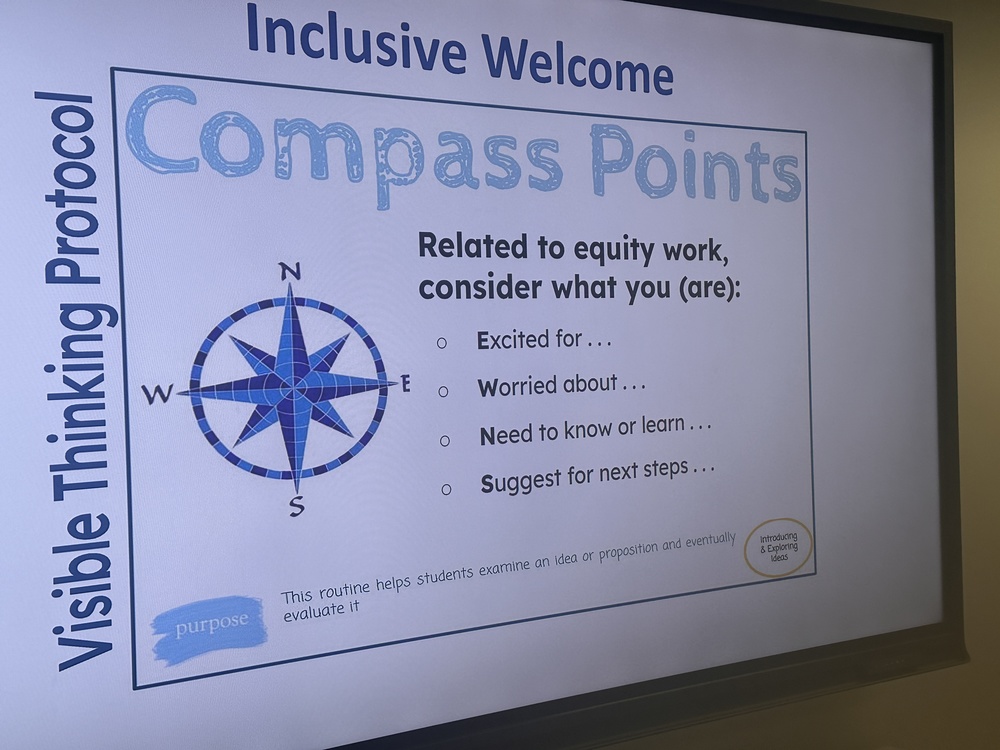
On June 3, 2025, the SWBOCES Diversity, Equity, and Inclusion Leaders’ Action Network gathered at the Center for Professional Learning & Curriculum Support (PLCS) for their final meeting of the school year. Educators from across the region, along with Southern Westchester BOCES staff, came together to share the focus of their yearlong equity projects and provide updates on their work.
Throughout the year, the Action Network was guided by Center staff members Adam Weinstock, Assistant Director; Sadika Clarke, Supervisor of Community, Culture & Wellness; and Christine Olsen, Resource Specialist at HVBERN. During the culminating session, the group presented highlights of SWBOCES’ internal equity initiatives, underscoring the organization’s ongoing commitment to this important work.
The gathering served as both a celebration of progress and a moment of shared learning. Each team took time to present the focus of their equity work, the strategies they implemented, and the lessons they learned along the way.
While the projects reflected the unique needs and priorities of each school community, common themes of student voice, inclusive practices, and culturally responsive teaching emerged—underscoring the collective commitment to fostering more equitable school environments.
Exploring Chronic Absenteeism Through an Equity Lens
One team focused on chronic absenteeism, applying the first pillar of the Culturally Responsive-Sustaining Education (CRSE) framework: creating a welcoming and affirming environment. Chronic absenteeism—defined as missing 10% or more of the school year—was both a symptom and cause of disengagement and poor academic outcomes.
The team’s data showed an average absenteeism rate of 14–16%, with the incoming freshman class reaching 21%. In a climate where equity work has faced increased scrutiny, the team chose absenteeism as a strategic and accessible entry point into conversations about student belonging. They partnered with counselors to identify chronically absent students and conducted student surveys and focus groups. The findings revealed mental health challenges, academic pressure, and early start times as key barriers to attendance. Most students surveyed reported feeling neutral or dread about attending school—revealing a gap between teacher perceptions and student experience.
Recommendations included expanded mental health support, school schedule adjustments, and a sustained focus on affirming school environments to strengthen student connectedness.
Raising Awareness and Embedding Equity in School Culture
Another participating team centered its project on building district-wide awareness of a board policy outlining the district’s commitment to diversity, equity, and inclusion. Early in the year, the team discovered that many district and building leaders were unaware of the policy. In response, they launched an internal education campaign that included presentations at leadership meetings, a practical “Principal’s Guide,” and faculty-wide discussions linking equity goals to the district’s broader mission.
Focus groups were conducted in three schools and included a cross-section of parents, educators, safety officers, and multilingual learner teachers. Participants expressed a strong need for district-level support and access to inclusive classroom materials. One school created its own equity guide based on district resources, demonstrating initiative and ownership of the work.
In one high school, restorative practices have already led to measurable improvements in attendance, graduation rates, and behavior. The school implemented a calm room and restructured its in-school suspension as a “restorative space” where students receive emotional support and reflection time. Welcome-back meetings for suspended students now center on student strengths and reintegration into the school community.
Student voice continues to shape the work. For example, multilingual learners shared that being grouped together in classrooms often made them feel excluded, prompting teachers to shift grouping practices. Future steps include expanding focus groups, aligning the code of conduct with equity principles, embedding these priorities into school improvement plans, and exploring partnerships to support underserved student groups.
The Policy to Practice Bridge
A third district’s team shared how its equity efforts evolved from loosely coordinated activities into a structured, districtwide initiative. A leadership team was formed with representation from each school building. While awaiting formal Board approval of a district equity policy, the group advanced its efforts by developing resources and tools to support implementation in the interim.
This included the creation of a web-based toolkit and a district newsletter featuring culturally responsive practices and student voice. Members of the leadership team also participated in professional development workshops and conferences to bring new strategies back to their schools.
Student-centered programming played a significant role. A “One Book, One School” initiative highlighted neurodiversity, reinforcing the idea that “great minds don’t think alike.” A walkathon raised awareness of different abilities, and students led announcements and community movie nights that explored identity and family.
As the team builds broader engagement, they remain committed to professional learning and providing educators with practical tools for classroom inclusion.
Centering Student Voice in Community-Based Service
Finally, a fourth team focused its project on student voice and community engagement through a two-part Martin Luther King Jr. Day of Learning and Service. Students explored Dr. King’s legacy and developed service projects rooted in both education and civic action.
The events provided a welcoming space for students and community members. Activities included reading with younger students, organizing social events with local seniors, and participating in wellness and self-defense workshops. These experiences emphasized inclusion, leadership, and social responsibility.
Feedback was overwhelmingly positive, with students reporting increased engagement and leadership growth. The district plans to continue the event annually and expand opportunities for students to lead future service and learning initiatives.
Among those in attendance was Dr. Dianne Wynne, Executive Director of the New York State Education Department’s Office of Diversity, Equity, and Inclusion. Dr. Wynne closed the session by praising the depth and creativity of the projects noting, "It was truly inspiring to hear all of the wonderful work happening in your region."
Adam Weinstock reflected on the day’s presentations, saying, “The projects and reflections shared by the participating district teams show what’s possible when equity work is grounded in student voice and responsive to each school community’s unique context.” He added, “At a time when diversity, equity, and inclusion are often politicized or misrepresented, the work of the Action Network reminds us that this is, at its core, about ensuring every student feels a sense of belonging and has the opportunity to succeed.”
For more information about The Center for Professional Learning & Curriculum Support and its programs, visit plcs.swboces.org.